Cong cuo, the side rows
The ranges set parallel to the main hall on either side, added to as the family grew.
Pronunciation cóng cuò|Houses and settlement|One entry in the Chaoshan glossary
What it means
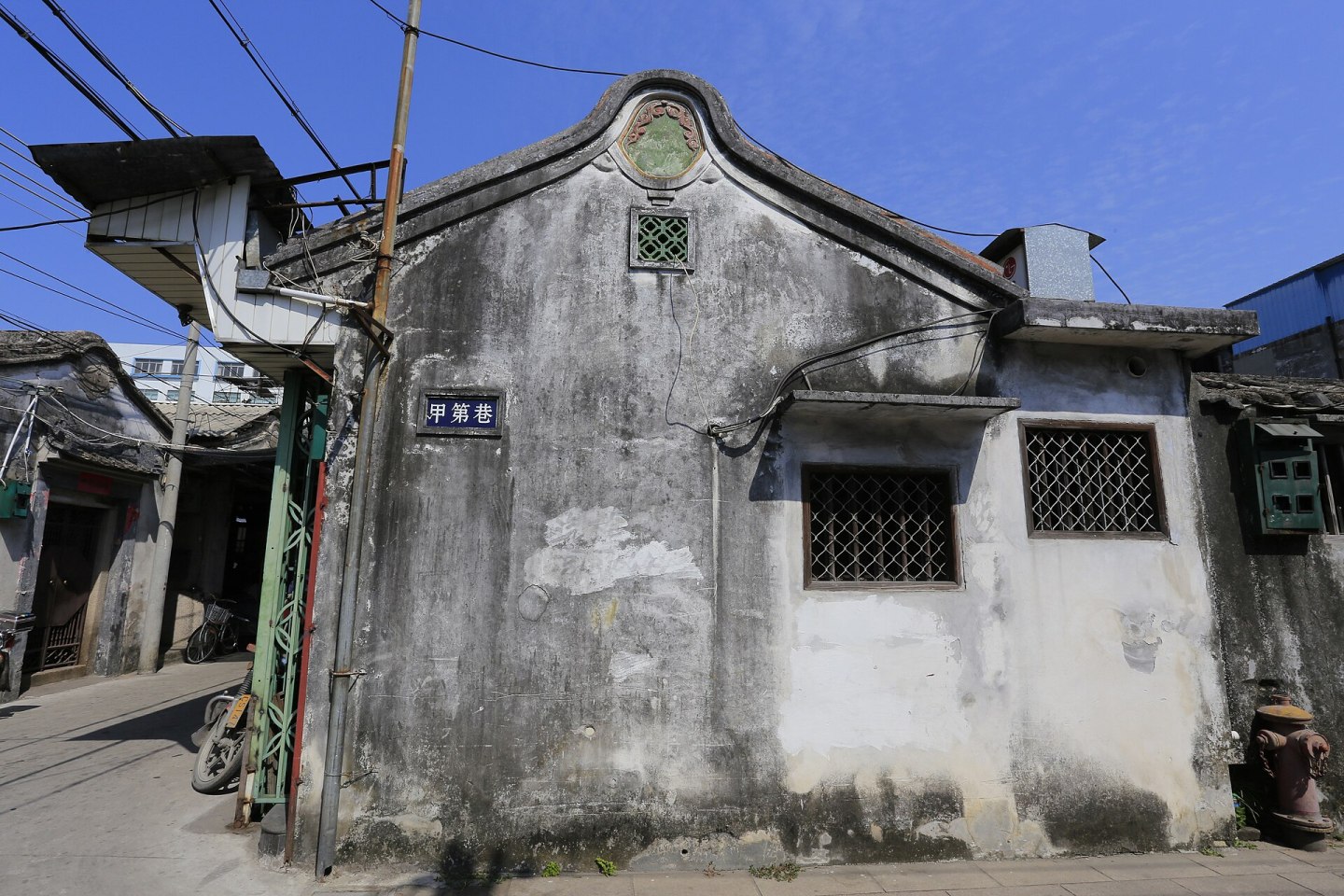
The subordinate ranges laid out parallel to the main hall, also called hu cuo, the protecting rows. They sit a step lower than the hall, are shallower front to back, and serve for living, storage and cooking.
As the household grows another row goes on behind, and each added row is a luo. The age of an old house can therefore be read off its rows: the further out, the later built.
How to tell them apart
Look at the height of the ridges: the hall is highest and the side rows step down from it. Then look at the wall and the bond of the brickwork — on a row added later the colour of the brick and the mortar joints usually fail to match.
Words easily confused
Cong cuo are the flanking rows, and have nothing to do with the cong xi in Cong xi gong ci: that is the name of a hall, while this describes where a building stands.
Read next: Houses and settlements: plan, layout and material.
Same group: four-point gold, tiger coming down the hill, cuo, the house.
Home › Glossary › Houses and settlement › Side rows
Text on this site is CC BY-SA 4.0; copyright in images is reserved and commercial use requires a separate licence.
Last revised: 3 November 2026