Dong jie wan, winter solstice dumplings
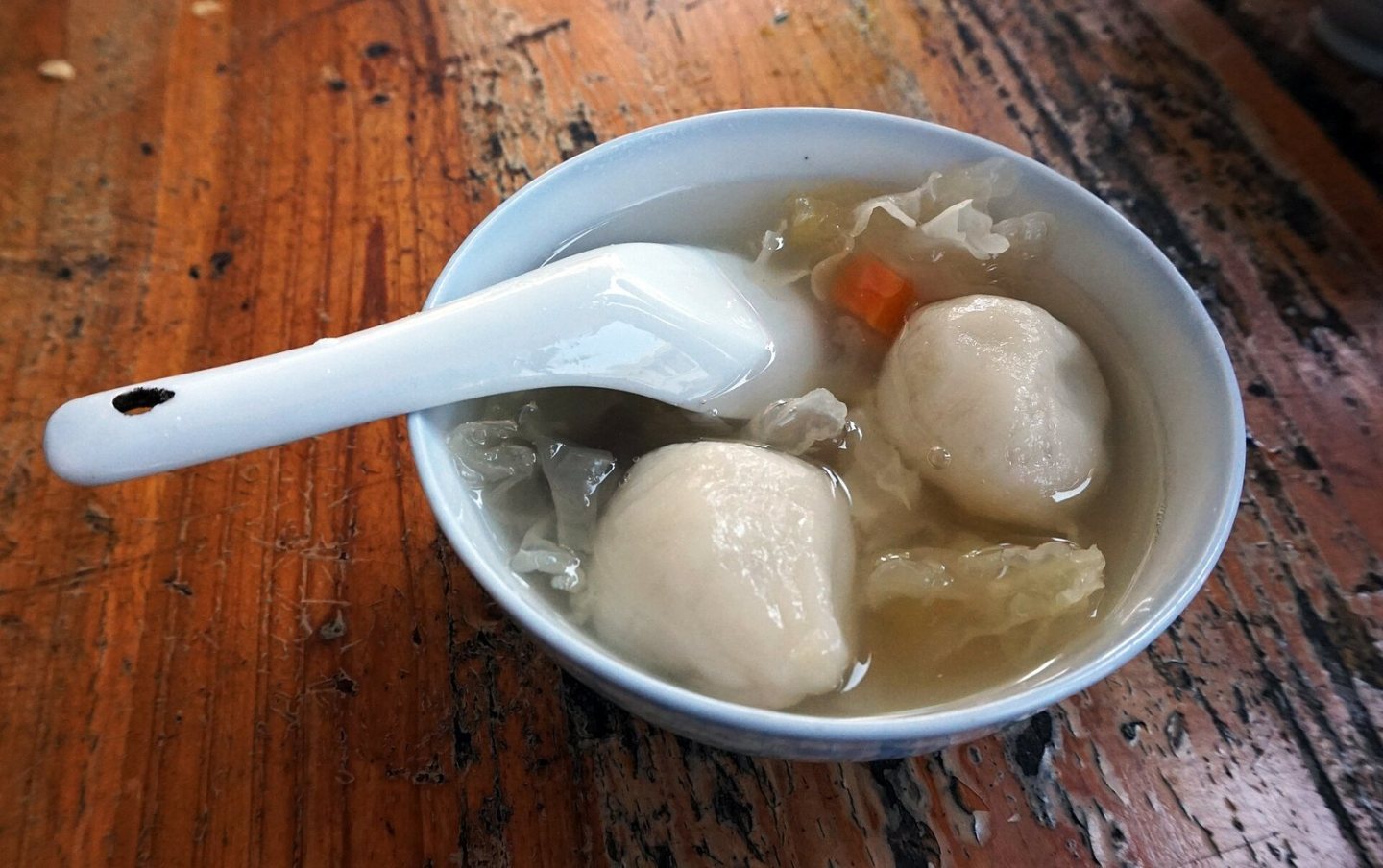
The glutinous rice balls of the winter solstice. The solstice is called dong jie here, and eating the balls counts as adding a year.
Pronunciation dōng jié wán|Food and tea|One entry in the Chaoshan glossary
What it means
Glutinous rice flour is rolled into small balls and boiled in sweet water. Some households roll two sizes and call them grandfather-and-grandson balls. The solstice is dong jie in Chaoshan, and once the balls have been eaten a person is a year older.
The prefectural gazetteer records it: at the winter solstice sacrifice, rice balls are used, or used to stick things, which is called feeding the wasteful. Mi yuan are the rice balls; sticking them to doors, windows and vessels is feeding the god of waste, so that nothing in the house gets damaged.
When you eat it
On the day of the solstice, with the ancestors sacrificed to first and the eating after. The sticking of balls on doors and windows has largely gone; what is left is the eating.
Words easily confused
Dong jie wan are the solstice balls; ya mu nian are the larger ones with a filling. Both are glutinous rice flour, but one belongs to the festival and the other is a dessert.
Read next: Winter solstice: the rice balls and the ancestors.
Same group: the eight festivals, the seven-vegetable soup, birthday rites.
Home › Glossary › Food and tea › Winter solstice dumplings
Text on this site is CC BY-SA 4.0; copyright in images is reserved and commercial use requires a separate licence.
Last revised: 3 November 2026