Lao ye gong, the village hall
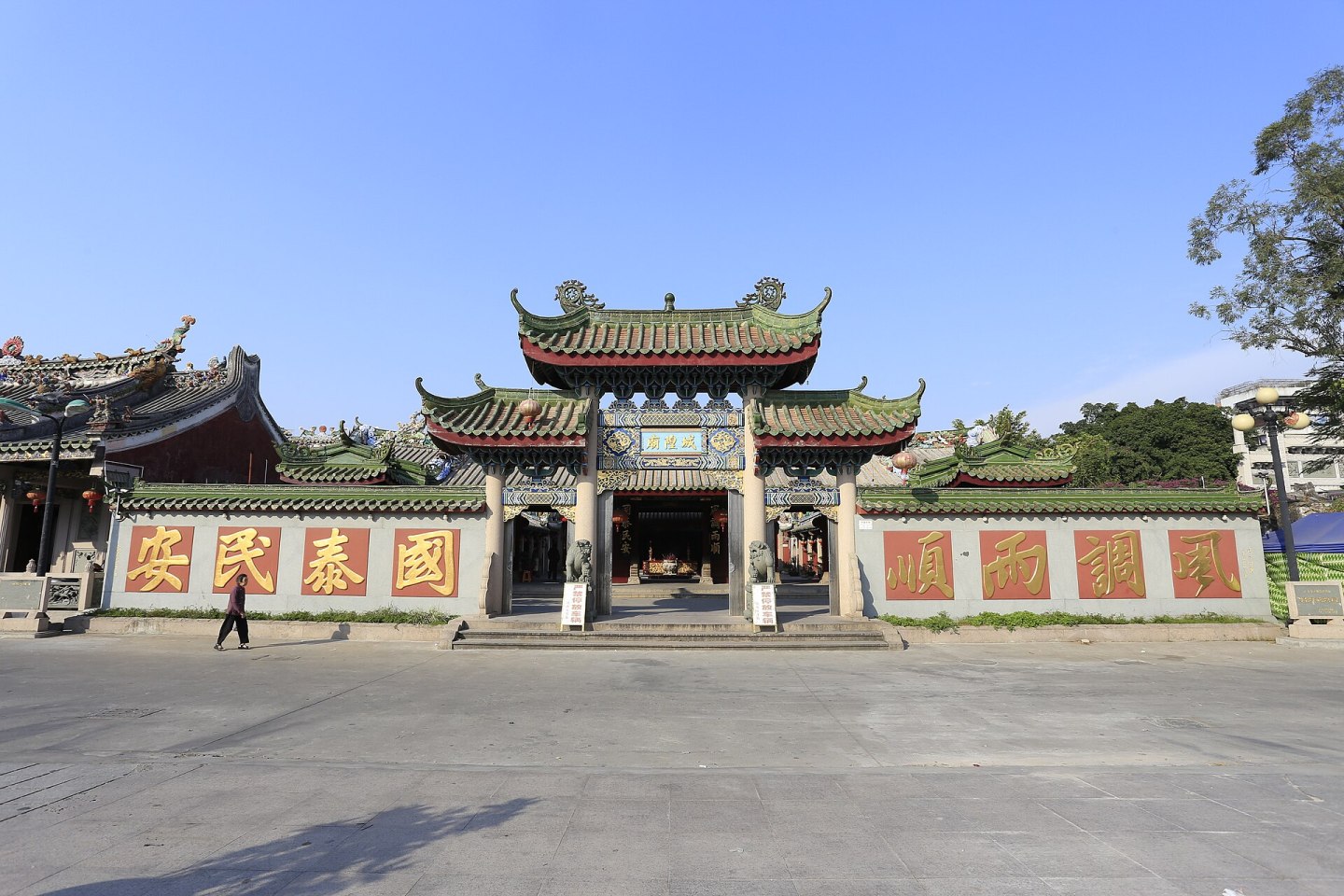
The hall where the gods are kept: the procession sets out from here and comes back here after the circuit.
Pronunciation lǎo yé gōng|Belief and processions|One entry in the Chaoshan glossary
What it means
Halls here are called gong, miao, an or si; one called a gong is usually the principal hall of a village or a district. One deity is the main occupant, with several ranged alongside, and the door plaque, the boards and the couplets record where it came from and when it was rebuilt.
The open ground in front is public space: offerings are laid out there, opera is performed there, people gather and settle affairs there. The door stands open, and incense is offered on ordinary days without waiting for a festival.
When you see it
Noisiest on the gods’ birthdays and in the first month, when the procession leaves by the temple door and re-enters by it — called “setting out” and “returning”. On an ordinary day you go for the building, the plaques and the couplets: the cut-and-stick porcelain under the eaves and the woodcarving on the beams are all above eye level.
Words easily confused
A lao ye gong honours gods, an ancestral hall honours ancestors, and the two organisations do not overlap: the hall is run by the village or a board, the ancestral hall by the lineage. A village may have an ancestral hall and no temple, or a temple and no ancestral hall.
Custom in Chaoshan villages; this page describes only, and neither endorses superstition nor prescribes behaviour.
Read next: Local religion and processions.
Same group: lao ye, ying lao ye, the ancestral hall.
Home › Glossary › Belief and processions › Lao ye gong
Text on this site is CC BY-SA 4.0; copyright in images is reserved and commercial use requires a separate licence.
Last revised: 3 November 2026