Shang tou, the dressing of the hair
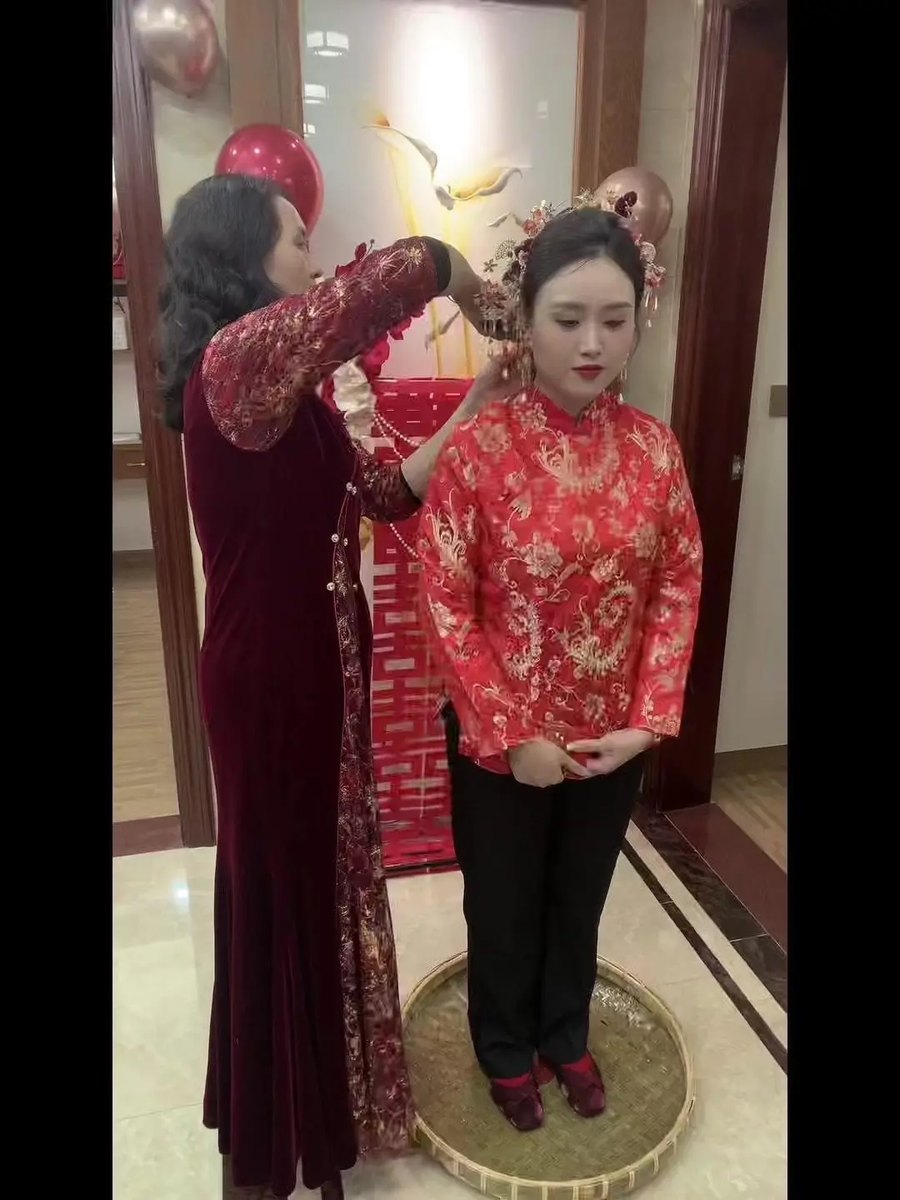
Before the wedding a lucky hour is chosen for the hair to be done: the bride’s plait unplaited and wound into a bun with a ju-i pin, the groom capped with a gold flower, each house doing its own.
Pronunciation shàng tóu|Rites of life|One entry in the Chaoshan glossary
What it means
Shang tou comes before the marriage, and the two houses hold it separately, each choosing its own lucky hour. On the bride’s side a hao ming ren, a woman of good fortune, undoes the girl’s plait and winds it into a bun, sets a ju-i pin, ties the red cord, and chants a four-line verse as she works. On the groom’s side the hair is combed, the cap put on, a gold flower set in it.
The table laid for it carries sweet rice balls, red eggs, red dates, a mirror, a comb, scissors and a ruler, each with a meaning: the mirror for clear sight, the ruler for measure, the scissors for cutting cloth and running a household. When the hair is done everyone eats a bowl of the sweet balls.
When you see it
Most often the night before the bride is fetched, sometimes in the small hours of the day itself, according to the hour the diviner has picked. After shang tou the bride mostly stays indoors and waits for the chair.
Words easily confused
Shang tou and wan mian, the threading of the face, are two rites: one works on the hair, the other on the fine down on the face, both done by a hao ming ren, and either may come first. Nor is it chu huayuan — that is the coming of age at fifteen, this is a marriage.
Read next: Chaoshan marriage: from the first approach to the return visit.
See also: Rites of life: the five thresholds side by side.
Same group: threading the face, setting the bed, the six rites, the woman of good fortune.
Home › Glossary › Rites of life › The dressing of the hair
Text on this site is CC BY-SA 4.0; copyright in images is reserved and commercial use requires a separate licence.
Last revised: 3 November 2026