The wedding red skirt and the ceremonial embroidered dress
The red skirt a Chaoshan bride wears is where Chaozhou embroidery is put to its most practical use. It is not an exhibit: it is worn through a whole sequence of rites, from the morning she leaves the house to the last table of the feast.
What it consists of构成
The common account is a red jacket fastening at the side above, a red skirt below, with embroidered shoes and a headdress. Jacket and skirt are usually red, for the auspicious colour, and the embroidery gathers where a walking figure shows it: the edge of the front opening, the cuffs, the front panel of the skirt and the hem.
In the city of Chaozhou there is another cut, which the local wedding trade calls wu ju qi, ‘five skirts complete’: a red embroidered jacket fastening at the side above, black trousers below, and five embroidered skirt panels sewn under the hem of the jacket. The skirt here is not a separate garment but five panels stitched onto the jacket. This comes from the accounts of the wedding trade and the bridal shops themselves; the prefectural gazetteer does not record it.
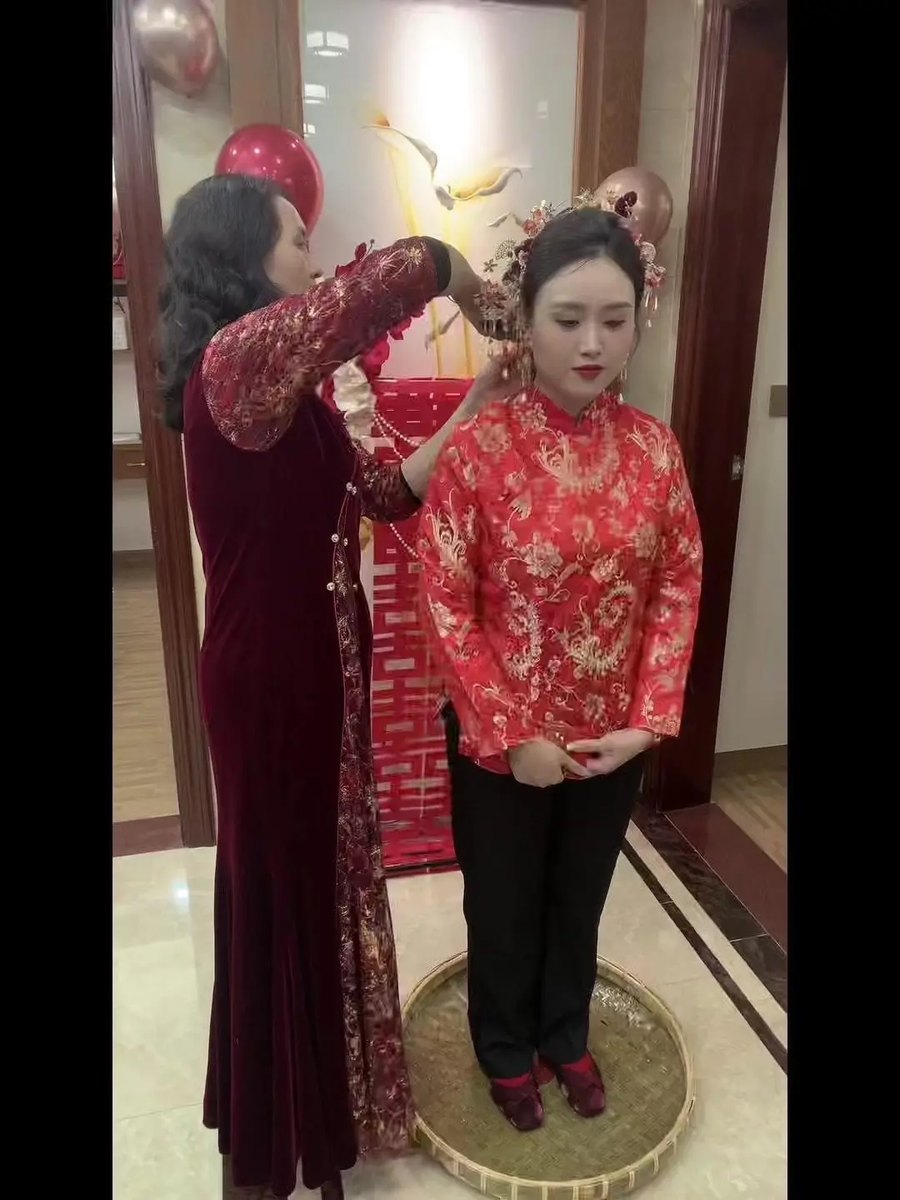
The stitching is mostly ding jin xiu, gold thread laid over a padded ground, together with velvet stitch: gold for the outline, velvet for the fill, so that the piece shines gold at a distance and reads in layers close up. It is the technique system of Chao embroidery, unchanged.
Rite and dress, one to the other礼与衣的对应
In the order of the marriage rites the change of dress is a marker. Fetching the bride, bowing in the hall, offering tea, seating the guests: each has its own dress. When the dress changes, the standing and the occasion change with it. So a wedding dress is not one garment to be looked at but a set, read by the moment it is worn at.

The gazetteer does not go into this layer. It says only that capping, marriage, mourning and sacrifice ‘mostly follow the Family Rituals of Zhu Wengong’; the frame of the rite is there, the detail of the dress has to be looked for elsewhere.

The words used here用词
- chao xiu: Chaozhou embroidery, the technique the panels come from
- ding jin xiu: gold thread laid over a padded ground, the main stitch of the jacket
- shang tou: the dressing of the bride’s hair by an elder before she leaves the house
Related关联
For the stitching, see Chao embroidery; for where the jacket of the ceremonial dress comes from, see da ju shan; for the order of the rites, see Chaoshan traditional marriage rites.
Sources来源
Category notes on ‘daily life and dress’ in the Chaoshan folk-custom multimedia database; the Chaozhou section of the Gujin Tushu Jicheng, quoting the Guo gazetteer, ‘capping, marriage, mourning and sacrifice mostly follow the Family Rituals of Zhu Wengong’; fieldwork on this site pending. Accessed 18 October 2026.
Home › Rites of life › The wedding red skirt
Original text on this site is CC BY-SA 4.0; images remain under the copyright of their authors and commercial use needs a separate licence.
Last revised: 5 November 2026